
TL;DR
Struggling to sell coaching without feeling pushy?
Here’s what works:
Your funnel should filter people, not force them
Lead with a real gift that solves one problem completely
Teach the strategy first – they’ll realize they need help with implementation
Give people choices so they feel in control
Bottom line: Build trust first, sell second. Sales become natural when you help genuinely.
Table of Contents
Introduction
You know that feeling when you’re about to send a sales email and your finger hovers over the button?
That moment of “am I being too pushy?” hits different when you’re a coach. You got into this to help people, not spam them with BUY NOW messages every other day.
You aren’t alone if you’re afraid of being pushy. It’s one of the top reasons coaches struggle to fill their practice. But the ones who figure out how to sell authentically? They’re booking clients consistently left and right, while others are still tiptoeing around their offers.
Look, you don’t need to turn into some slick salesperson to fill your coaching practice. You need a coaching funnel that does the selling for you – one that attracts the right people, builds real trust, and makes sales feel natural instead of forced.
In this post, I’m breaking down 3 secrets that separate funnels that convert from funnels that feel obnoxiously salesy. These aren’t theories or guru “proven systems.” These are the strategies that work when you want to sell without being salesy.
Let’s dig into it.
What Is a Coaching Funnel (And Why Most Coaches Get It Wrong)

Most coaches think a funnel is just “steps to get people to buy.”
And technically, yeah, that’s what it is. But when you approach it like that, you end up building something that feels like a sales trap.
A coaching funnel is the journey someone takes from “I don’t know you” to “take my money!” This usually looks like: they find your free content, sign up for something (lead magnet or webinar), get emails that build trust, and eventually book a call or buy your program.
Simple enough, right?
Here’s where most coaches mess it up. They build funnels to sell, not to serve. Every email pushing toward the sale. Every piece of content trying to convince. And people can smell that from a mile away.
The first big mistake is copying someone else’s funnel without understanding your audience. What works for a business coach won’t work for a life coach. Your people are different. Their problems are different. Your funnel needs to reflect that.
It should help the right people say yes and the wrong people say no. When you try to convince everyone, you end up with tire-kickers who ghost after discovery calls. When you filter, you get people who are actually ready to work with you.
A healthy coaching sales funnel has stages, but each stage should feel natural. Like a conversation with someone at a coffee shop who’s genuinely interested in what you do.
- First, you give value (free resource or training)
- Then you build relationship (helpful emails and content)
- Then you make an invite (not a hard sell, just an invitation to work together)
Now let’s talk numbers. A “good” coaching funnel typically converts somewhere between 2-5% from lead to paying client. That means if 100 people join your email list, 2-5 should eventually buy (source).
But here’s what matters more: conversion rates beat traffic every time. You can have 10,000 people in your funnel, but if it leaks everywhere, you’ll make less than someone with 500 people and a tight funnel.
Stop copying other people’s funnels. Think about your people. What do they need to hear? What questions do they have? What would make them think “okay, this person actually gets me”?
That’s what makes a funnel work.
Want to Know Exactly What’s Broken in Your Funnel?
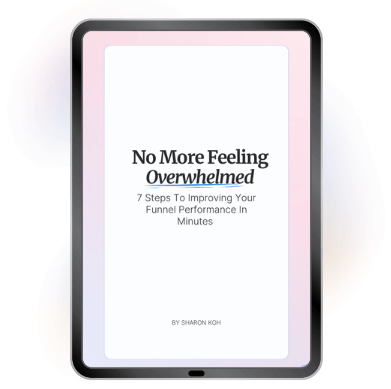
Download my free checklist: 7 Steps To Improving Your Funnel Performance In Minutes.
Get a simple process to find the leaks in your funnel and fix them fast – no guesswork needed.
Secret #1 : Lead With a Gift, Not a Pitch

Here’s the difference between a lead magnet and a gift.
A lead magnet is transactional – you give me your email, I give you a thing. A gift is genuinely helpful – I give you something valuable because I actually want to help, and if you like it, maybe you’ll stick around.
People buy from those who’ve already helped them. Not those who promise to help them if they pay.
Most coaches throw together a generic PDF checklist and wonder why nobody engages after downloading it. It’s because the “lead magnet” didn’t actually do anything. It was just a bait to get an email address.
Here’s what makes a lead magnet actually valuable: it solves one specific problem completely.
Not 10 problems partially. One problem, solved.
They should be able to take action immediately after consuming it.
Some examples that work well:
- A 20-minute video training on a specific struggle
- An assessment or quiz giving them clarity
- A simple template or framework they can use right away
- A mini email course (3-5 days) walking them through a process
What doesn’t work? Generic checklists. Ebooks nobody reads. Filler content just to get their email.
The real test: would this be valuable enough that someone would pay for it? If not, it’s probably not good enough as a “free” gift either.
Once they’re in, your follow-up sequence is where the magic happens.
But most coaches get this wrong. They go: value email, value email, HARD PITCH, value email, HARD PITCH. People aren’t dumb. They know when you’re buttering them up for a sale.
Give actual helpful content in the first two emails. Then share a story – maybe about a client transformation or what you’ve learned. And in that story, naturally mention your offer.
For example, instead of “Book a call with me now!” try “If you’re dealing with something similar and want personalized help, I’ve got a few spots open this month – just reply to this email and let’s chat.”
See the difference? One feels like being sold to. The other feels like being invited.
Common mistake: coaches either give away too much (why would I pay you if you taught me everything?) or not enough (this told me nothing useful).
The balance is this – teach them what to do, but they still need you for how to actually implement it or to get it done faster.
Build trust first, sell second.
Secret #2 : Use Education-Based Selling (Let Them Convince Themselves)

Education-based selling means you teach people what they need to know, and in learning it, they realize they need more support.
They convince themselves.
Here’s the difference: Teaching builds awareness. Selling creates transformation.
You can teach someone the steps to grow their coaching business, but actually helping them take those steps- that’s your zone of genius, and that’s what people pay for.
This is the “aha moment” strategy. You help people have that moment where they go “oh, I get it now… and I also get why I need help.”
At the end, you say: “Now you’ve got the whole framework. If you want to build this yourself, go for it. If you’d rather have help getting it right the first time, let’s talk.”
Here’s how it works: send 5-7 emails where each one teaches something specific and actionable about the topic they signed up for.
Maybe email 1 breaks down how to identify what’s really stopping your clients from scaling their business. Email 2 shows them how to position their offer so it doesn’t sound like every other coaches out there. Email 3 walks them through booking sales calls without chasing people down and add social proof/ testimonial of what your clients has achieved by working with you.
Each email gives them real value – something they can actually use. But here’s what happens: as they’re learning the “what,” they start realizing the “how” is harder than they thought. Or they see it’ll take more time than they have. Or they just want someone who’s already done it successfully to help them get it right.
By email 5 or 6, you’ve built trust and shown them you know your stuff. Then you say something like: “Now you’ve got the framework. If you want to tackle this yourself, go for it. But if you’d rather have help getting this done right the first time, here’s how we can work together.”
The people who are ready will say yes. The people who aren’t won’t. And that’s fine.
Webinars work great for this too. Teach for 45 minutes, answer questions, give away frameworks. Then at the end: “If you liked this and want personalized help applying it to your business, here’s how we can work together.”
Case studies and transformation stories are powerful here. When you show how someone went from struggling to thriving, people start picturing themselves in that story.
But don’t make it braggy. Make it about them, not you. Focus on the struggle, the process, the outcome. You’re just the guide.
Timing matters. Don’t pitch too early (they don’t trust you yet) or too late (they’ve moved on). Usually after you’ve given solid value 2-3 times, that’s when people are most open.
You’re not convincing them to buy. You’re showing them what’s possible and letting them decide if they want help getting there.
Want to understand the psychology behind why this works? Check out these 5 funnel psychology secrets that make selling feel natural.
Secret #3 : Build in Permission Points (Let Them Choose Their Journey)

Permission points are moments where you let people choose their own path.
You’re not dragging everyone down the same tunnel toward a sale. You’re giving them options.
The psychology: people hate being sold to, but they love buying. When you give someone a choice, they feel in control. And when they feel in control, they’re way more likely to say yes.
Examples of permission points:
In your emails, ask questions. Let them reply and tell you what they need. Something simple like: “Where are you at with your coaching business? Reply with A, B, or C: A – Just starting out B – Got clients but inconsistent C – Doing okay but need help with something specific”
Then tailor your follow-up based on their answer. The people who picked B or C? Those are your ideal clients.
Before booking calls, use an application. Not as a barrier – but as a filter. Simple questions like “What’s your biggest challenge?” and “Are you ready to invest in getting help?”
Some people aren’t ready. And that’s fine. Better they realize it before the call, not after you’ve spent an hour trying to help them.
The “choose your own adventure” email strategy works well too. “Do you want to learn about A) building your coaching program or B) getting your first clients? Click the one you want.”
Then send them down different paths based on their interest. Feels personalized even though it’s automated.
Tripwire offers (low-ticket like $27-$47) can work if your main offer is high-ticket. It helps people get a taste before committing big money. But only if the tripwire leads naturally into your main offer. Otherwise it’s just a distraction.
When you add permission points, you’ll notice: your sales calls convert better because you’re only talking to people who are actually ready. Some people will self-select out, and that’s good. They weren’t a fit anyway.
Give people choices. Let them tell you what they need. Trust that the right people will raise their hand while the wrong people move on.
Your funnel should feel like a conversation, not a conveyor belt.
How to Know If Your Coaching Funnel Is Working

You need to track conversion rates at each stage. Not just “did they buy” but where exactly they’re dropping off.
Track these key metrics at each stage:
- How many visitors become leads
- How many leads open and click your emails
- How many engaged leads book sales calls
- How many calls turn into clients
Traffic doesn’t matter if your funnel leaks. Better to have 500 people and a tight funnel than 10,000 and a broken one.
Red flags your funnel is too salesy:
- High unsubscribe rates after every email
- People booking calls then ghosting
- Low email open rates (people just deleting your emails)
Green flags your funnel is working:
- People replying with questions or stories
- Getting referrals from people who didn’t buy yet
- High show-up rates for sales calls
- People saying “I feel like I already know you” on calls
Don’t tweak every week. If you’ve got less than 50-100 people through your funnel, you don’t have enough data. Let it run, then make one change at a time.
According to research on the Pareto (80/20) rule, a small percentage of causes often generate the majority of results in marketing. That means in your coaching funnel you’ll get most uplift by tweaking the vital few parts – offer clarity, subject lines and CTA – before chasing every minor detail. (Smart Insights)
Not sure why your funnel isn’t converting? Read about 3 proven reasons your funnel is broken (and how to fix them fast).
Common Coaching Funnel Mistakes That Kill Conversions

Mistake #1: Overwhelming people with too many steps. Keep it simple.
Mistake #2: Not having a clear next step at each stage. Always tell them what to do next with a clear call-to-action button.
Mistake #3: Making the sales call the only path to purchase. Some people want to buy without talking.
Mistake #4: Copying someone else’s funnel without testing it for your niche. What works for them might not work for you.
Mistake #5: Neglecting email nurture because you’re afraid to “bother” people. They signed up. They want to hear from you.
Mistake #6: Not following up enough. Most sales happen after the 5th touchpoint, not the first.
Mistake #7: Treating your funnel like “set it and forget it.” Funnels need tweaking and testing.
Fix these and you’ll see the difference. Want to know what’s specifically killing your conversions? Check out these 3 funnel bottlenecks that might be the problem.
Spot What’s Stopping Your Funnel From Converting Clients
Download my free checklist: 7 Steps To Improving Your Funnel Performance In Minutes.
Get a simple process to find the leaks in your funnel and fix them fast – no guesswork needed.
Final Thoughts
Here’s the morale: selling doesn’t have to feel obnoxious.
When you build a coaching funnel that leads with value, educates instead of pitches, and gives people choices along the way, sales become natural. Not easy – it still takes work – but natural.
I’m not gonna say you’ll make 6-figures overnight. That’s not how this works. But if you implement even one of these secrets, you’ll notice the difference. More replies. Sales calls that don’t feel awkward- especially when you set people up for success before the call even starts. Less apologizing every time you mention your offer.
Start with whichever secret resonated most. Maybe it’s creating a better lead magnet. Maybe it’s adding permission points. Or maybe it’s just changing your mindset to see selling as serving.
Test it. Track it. Tweak it.
And remember: yes, you can quit, but not today. Keep showing up, keep serving, and the sales will follow.
What’s one thing you’re gonna try first today?
FAQ
How long does it take to build a coaching funnel?
A simple coaching funnel can be set up in a week – lead magnet, landing page, email sequence, and booking page. But getting it to convert well? That takes testing. Give yourself 2-3 months to collect data and make adjustments. Don’t expect it to be perfect on day one.
What’s the best lead magnet for coaches?
The best lead magnet solves one specific problem your ideal client has right now. A 20-minute video training, a simple assessment, or a practical template work better than generic PDFs. Make it valuable enough that someone would pay for it – that’s how you know it’s good enough.
How many emails should be in my coaching funnel?
Start with 3-5 emails in your welcome sequence. First 2-3 emails should give pure value. Then share a story with a soft offer. Then make a clear invitation to work together. After that, move them to your regular newsletter where you keep nurturing.
Do I need expensive funnel software?
No. You can start with basic tools – an email platform like ConvertKit or Mailchimp, a simple landing page builder, and a booking tool like Calendly. Don’t spend thousands on fancy software until you’ve proven your funnel actually converts.
What if people unsubscribe from my emails?
Some people will always unsubscribe – that’s normal. If you’re losing more than 1-2% per email, that’s a red flag. It usually means you’re pitching too hard, not providing enough value, or attracting the wrong people with your lead magnet.
How do I know if my funnel is too salesy?
Watch for these signs: high unsubscribe rates, people ghosting after booking calls, low reply rates, or direct feedback saying it feels pushy. If people aren’t engaging with your content and only hear from you when you’re selling, that’s too salesy.
Can a coaching funnel work without paid ads?
Absolutely. Many coaches build successful funnels using organic traffic – SEO, social media, networking, guest appearances, referrals. Paid ads can speed things up, but they’re not required. Focus on creating great content that attracts your ideal clients naturally.
How often should I email my list?
After your welcome sequence, email at least once a week. Consistent emails build trust and keep you top of mind. Just make sure most of your emails provide value – teach something, share insights, tell stories. Not every email needs a pitch.