
TL;DR
Track these 7 metrics to know if your coaching funnel results, whether it’s working well: landing page conversion (aim for 10-15%), email clicks (2-5%), sales page conversion (1-3%), how many subscribers buy over time, what each lead costs you, cart abandonment (keep below 20-30%), and how long before they buy.
Affiliate disclosure: some of the links are sponsored or affiliate links. If you decide to purchase a paid plan, we receive a commission at no extra cost to you.
Table of Contents
Introduction

Most coaches track too many numbers.
Their dashboards show 40+ different metrics. And most of the time they have no idea which ones actually matter.
Here’s what I know after building funnels for 18 months: only seven numbers tell you if your funnel works or not.
Everything else is noise.
Let me show you each one. I’ll explain what the numbers should look like and why they matter.
No fancy or crazy stuff. Just the metrics that tell you what you need for your funnel.
#1. Landing Page Conversion Rate
This is how many visitors give you their email address.
The math is easy: 100 people visit your page, 15 sign up = 15% conversion.
The mistake? Getting excited about traffic while ignoring this number.
You could have 1,000 visitors each month. But if only 66 people sign up, that’s 6.6% conversion.
That’s below average.
According to Unbounce’s 2024 analysis of 41,000 landing pages with 464 million visitors, the median landing page converts at 6.6%. That’s your baseline.
For coaches, aim for 10-15% on cold traffic. That’s considered “good” across industries.
Top performers hit 15% and above. Below 6.6% means you’re underperforming against the median.
A simple page with a strong headline beats a beautiful page with vague words. Every time.
Track this every week in your funnel builder. GoHighLevel and Systeme.io both show this number on your main screen.
Need more traffic to test your landing page properly? Pinterest can drive consistent visitors to your funnel – here’s how to repurpose your existing blog content into pins that convert.
#2. Email Click-Through Rate (CTR)
Once someone signs up, your emails need to get them clicking to your sales page.
This shows what percentage of people actually click your links.
Here’s the thing: open rates don’t predict money. Click rates do.
You can have 45% of people opening your emails. But if only 2% click anything, your emails are all talk and no action.
According to MailerLite’s 2025 benchmark data from 3.6 million campaigns, the average email click rate is 2.09%.
Aim for 2-5% clicks on regular nurture emails. For launches or sales, shoot for 3-8%.
Below 2% means your buttons aren’t clear enough.
The fix is simple: make your links obvious.
Bold them. Tell people exactly what happens when they click. Stop being mysterious about where you want them to go.
Need help with this? Check out my guide on how to write CTAs that actually work.
Check this every week in your email tool.
Most platforms show click-through rate right next to open rate.
To improve your email metrics, start with better email content.
#3. Sales Page Conversion Rate
This is your money number.
Of everyone who lands on your sales page, how many actually buy?
For coaching programs between $497-$2,997, expect 1-3% conversion based on industry data for online courses and coaching programs.
One case study showed a coaching sales page improving from 2% to 6% after optimization.
Below 1% means something’s not right.
Usually it’s one of two things:
Your offer doesn’t match what your emails promised. Or your price doesn’t match the value you built up.
Adding social proof to your sales page helps a lot here.
Your sales page conversion tells you if your whole funnel message matches up.
If people loved your free download and read all your emails but bounce off your sales page? There’s a disconnect somewhere.
Track this monthly at least. Running ads? Check it weekly.
Every percentage point matters when you’re paying for traffic.
Want to fix your funnel fast?
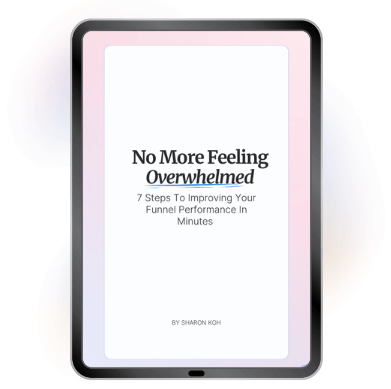
Download my free guide: “7 Steps To Improving Your Funnel Performance In Minutes”
#4. How Many Email Subscribers Actually Buy
This is your big picture number.
Of everyone who downloads your free thing, what percentage becomes a paying customer over time?
Most coaches get excited about growing their email list. They don’t track how many of those people actually buy.
Having 5,000 email subscribers sounds great. Until you realize you’re only making $2K a month.
That’s about 0.04% conversion.
For regular coaching funnels, industry observations suggest 1-3% of subscribers buying over time is realistic.
Live launches might hit 5-10% during the sale period.
Below 0.5% means your free download attracts the wrong people. Or your emails don’t connect to your offer.
Here’s why this matters:
A 2% conversion rate on a $997 offer means every 100 new subscribers should bring you about $1,994.
That’s how you know if your funnel actually makes money.
Check this number every three months. It won’t change week to week.
But it shows you if your funnel is getting better or worse.
If this stays low, you probably have one of these common funnel problems.
#5. What Each Lead Costs You (If You’re Running Ads)
If you’re paying for traffic, you need to know what each email subscriber costs.
Simple math: Total ad spend ÷ new emails = cost per lead.
Example: Spend $500 on ads, get 100 emails = $5 per lead.
But is $5 per lead actually profitable for YOUR funnel?
Here’s how to figure it out:
Say 2% of subscribers buy your $497 program. That’s 2 buyers from every 100 leads.
2 buyers × $497 = $994 revenue from 100 subscribers.
$994 ÷ 100 = $9.94 per lead to break even.
But you want profit. So aim for 30-50% of break-even.
That means paying $3-$5 per lead instead of $9.94.
At $5 per lead: 100 leads cost $500, you make $994, profit is $494.
At $9 per lead: 100 leads cost $900, you make $994, profit is only $94.
See the difference?
A $5 cost per lead sounds cheap. But without knowing your conversion rate and offer price, you can’t tell if it’s profitable.
Track this daily when ads are running. It changes fast.
Ads get tired. Audiences get saturated. Platform algorithms shift.
Catch problems early before you burn through your budget.
#6. How Many People Leave at Checkout
This is how many people add your offer to cart but never finish buying.
If 20 people start checkout and 5 leave, that’s 25% abandonment.
A lot of coaches don’t even know this happens. They’re not watching the number.
The average cart abandonment rate for ecommerce is 70% according to Baymard Institute’s analysis of 50+ studies.
But for digital products like coaching programs with simpler checkouts, you should aim much lower.
Keep cart abandonment below 20-30%. Below 20% is excellent.
Above 30% means something’s wrong.
Usually: limited payment options, too many steps, or surprise costs at the end.
Quick fixes:
Make checkout one page. Add PayPal next to credit card. Remove extra form fields. Show all costs upfront.
Most funnel builders show this in your sales section.
Check it monthly and fix what’s broken.
Every abandoned cart is money you almost made.
If lots of people are leaving at checkout, maybe it’s time for a full funnel checkup.
#7. How Long Before Someone Buys
How many days from sign-up to purchase? This tells you if your timing is right.
The mistake: running a 14-day email series when most people buy on day 3. Or day 21.
Your email length should match what your buyers actually do. Not what some blog post said to do.
For coaching funnels, most people buy within 7-14 days if your emails work.
If your average is 30+ days, your emails aren’t creating enough urgency. Or your follow-up needs work.
Check this every three months in your email tool.
It helps you figure out if you need shorter emails with stronger calls to action. Or longer teaching before you pitch.
Learning how to warm people up properly can cut this time way down.
What You Should Do Next
These seven numbers show you exactly where your funnel loses money.
Not 37 numbers. And not your Instagram followers.
Just these seven that connect to revenue.
Start with three this week:
- Landing page conversion
- Sales page conversion
- How many subscribers buy
Get those working before you worry about the rest.
If you’re looking at these numbers and realizing your funnel needs real help?
That’s what I do.
I work with coaches and course creators to build funnels that converts. Not just collect emails.
Let’s look at your funnel together. We’ll find where you’re losing sales.
Book your free funnel audit here.
Ready to stop guessing?
Download this: 7 Steps To Improving Your Funnel Performance In Minutes.
FAQ
What’s a good conversion rate for a coaching funnel?
It depends which part of your funnel you’re looking at. Landing pages should convert at 10-15% for cold traffic (6.6% is the median across all industries). Sales pages should hit 1-3% for coaching programs priced $497-$2,997. And overall, 1-3% of your email list should buy over time. Below these numbers means something needs fixing.
How often should I check my funnel metrics?
Check landing page conversion and email click rates weekly. Sales page conversion monthly (or weekly if running ads). Cost per lead daily when ads are active. The big picture stuff like how many subscribers buy and average time to purchase? Every three months is fine.
What if my numbers are way below these benchmarks?
Start with your landing page. If that’s converting below 6.6%, fix your headline and offer clarity first. Nothing else matters if people won’t even give you their email. Once that’s above 10%, move to your email clicks, then your sales page. Fix one thing at a time.
Do I need expensive tools to track these metrics?
Nope. GoHighLevel and Systeme.io both show these numbers on your dashboard. Even the free version of most email platforms shows click-through rates. You don’t need fancy analytics software. Just use what your funnel builder and email tool already that you are already using.
What’s the #1 funnel metrics for coaches?
Your subscriber-to-customer rate. This tells you if your whole funnel works. You can have great landing page numbers and email clicks, but if nobody’s buying, your funnel isn’t profitable. Start here to see the big picture, then drill down to find where things are to be improved.
Should I track different metrics for different offers?
The seven core metrics stay the same. But your funnel structure might affect your numbers. A webinar funnel will have different conversion patterns than a direct-to-sales-page funnel. A quiz will engage differently than a PDF download. Track the same seven metrics, but understand your specific funnel type when evaluating performance.
What if I’m not running paid ads yet?
Skip the cost per lead metric. Focus on the other six. You still need to know your conversion rates at every funnel stage. When you do start running ads, you’ll already know your baseline numbers and can calculate exactly how much you can afford to pay per lead.